

Claims Setup
Claims Setup
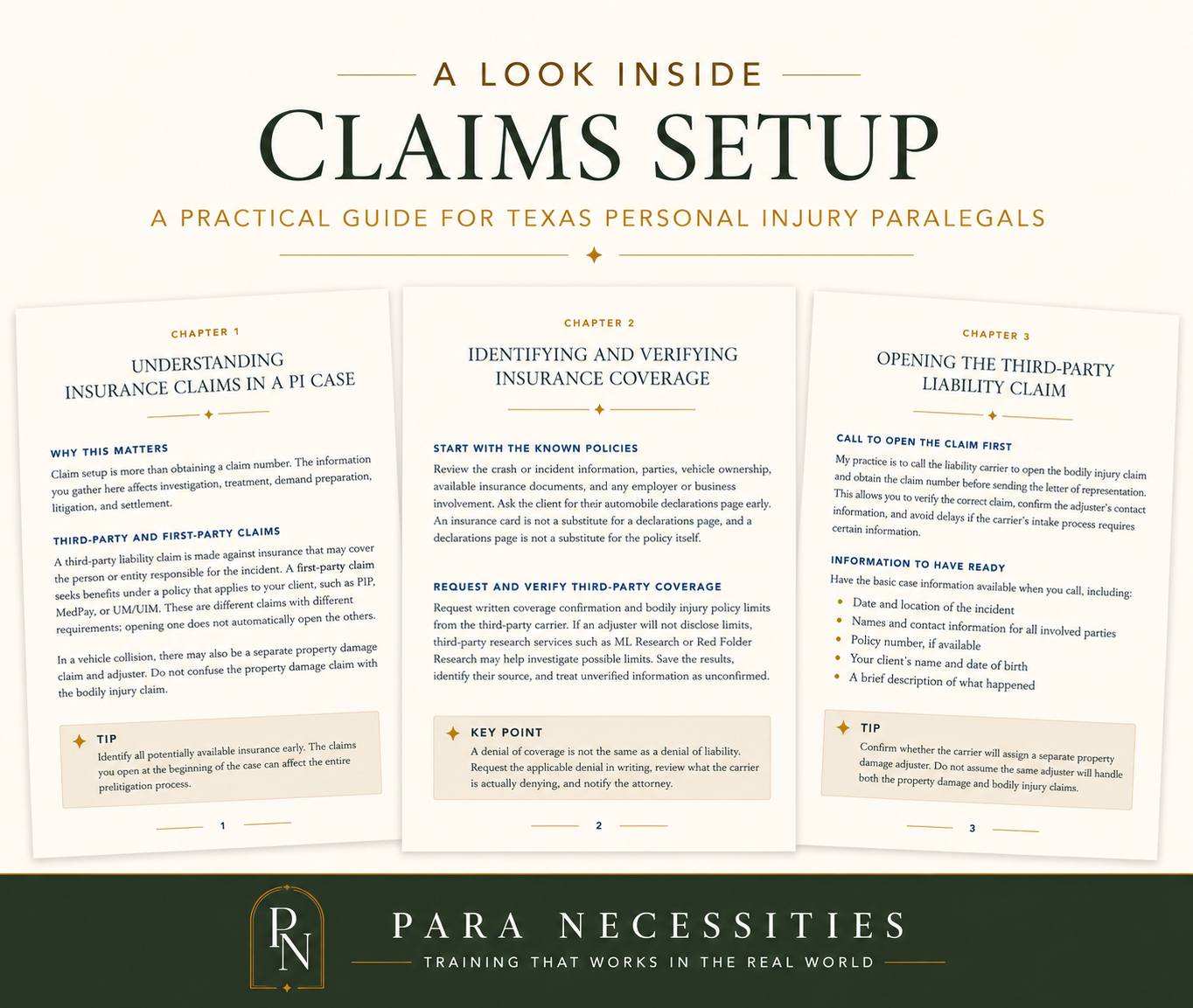
Opening an insurance claim is more than obtaining a claim number. The information gathered at the beginning of a personal injury case can affect everything that follows, from investigation and medical treatment to demand preparation, litigation, and settlement.
A single accident may involve multiple insurance claims, different carriers, and several types of coverage. Knowing which claims to open, what information to request, and how to track each one is an important part of managing a personal injury case.
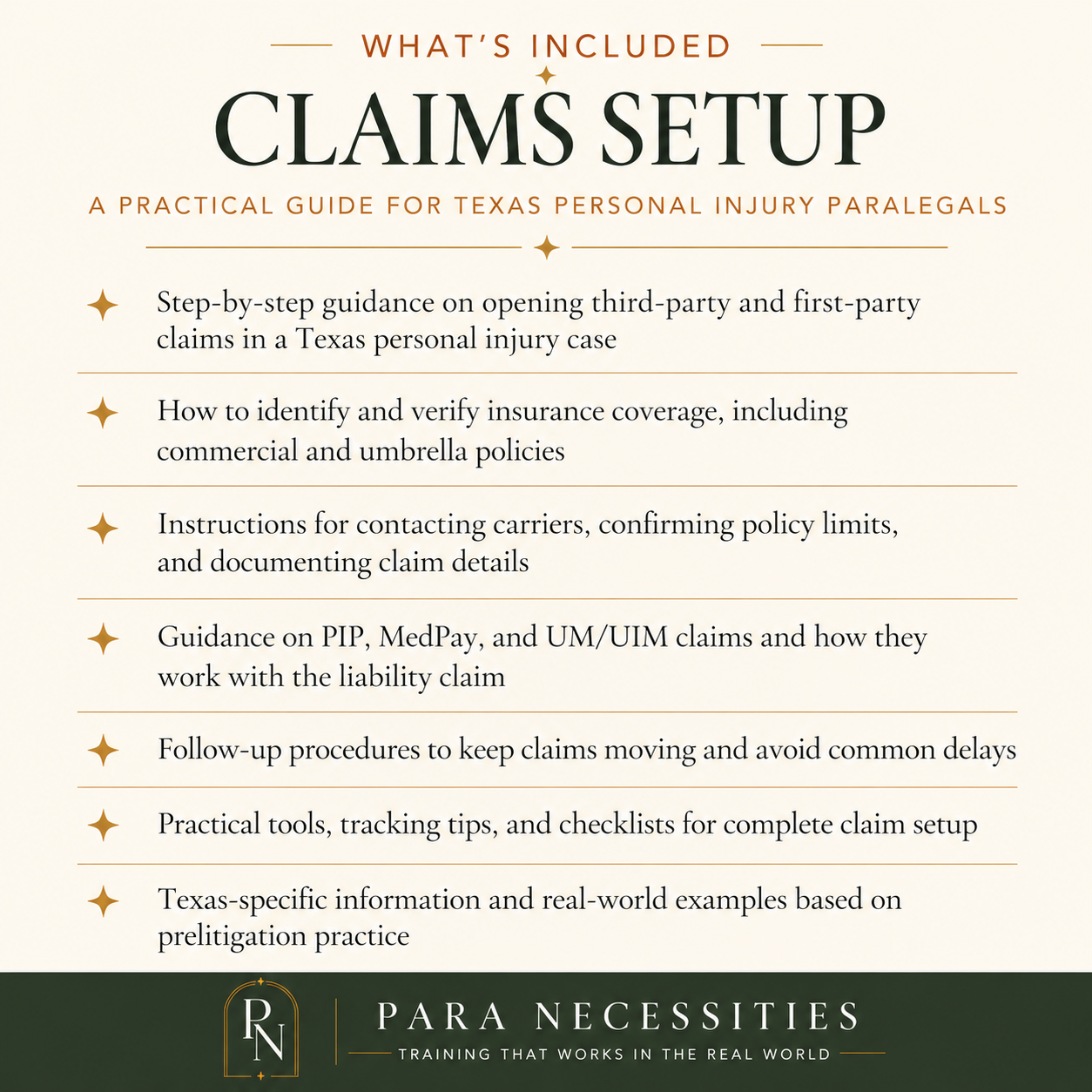
The Para Necessities Claims Setup Workbook walks Texas personal injury paralegals through the practical process of identifying insurance coverage, opening third-party and first-party claims, communicating with adjusters, and keeping claim information organized.
The goal is to help you understand how insurance claims work, what needs to happen when a new case is opened, and how to make sure important coverage information and follow-up tasks aren't overlooked.
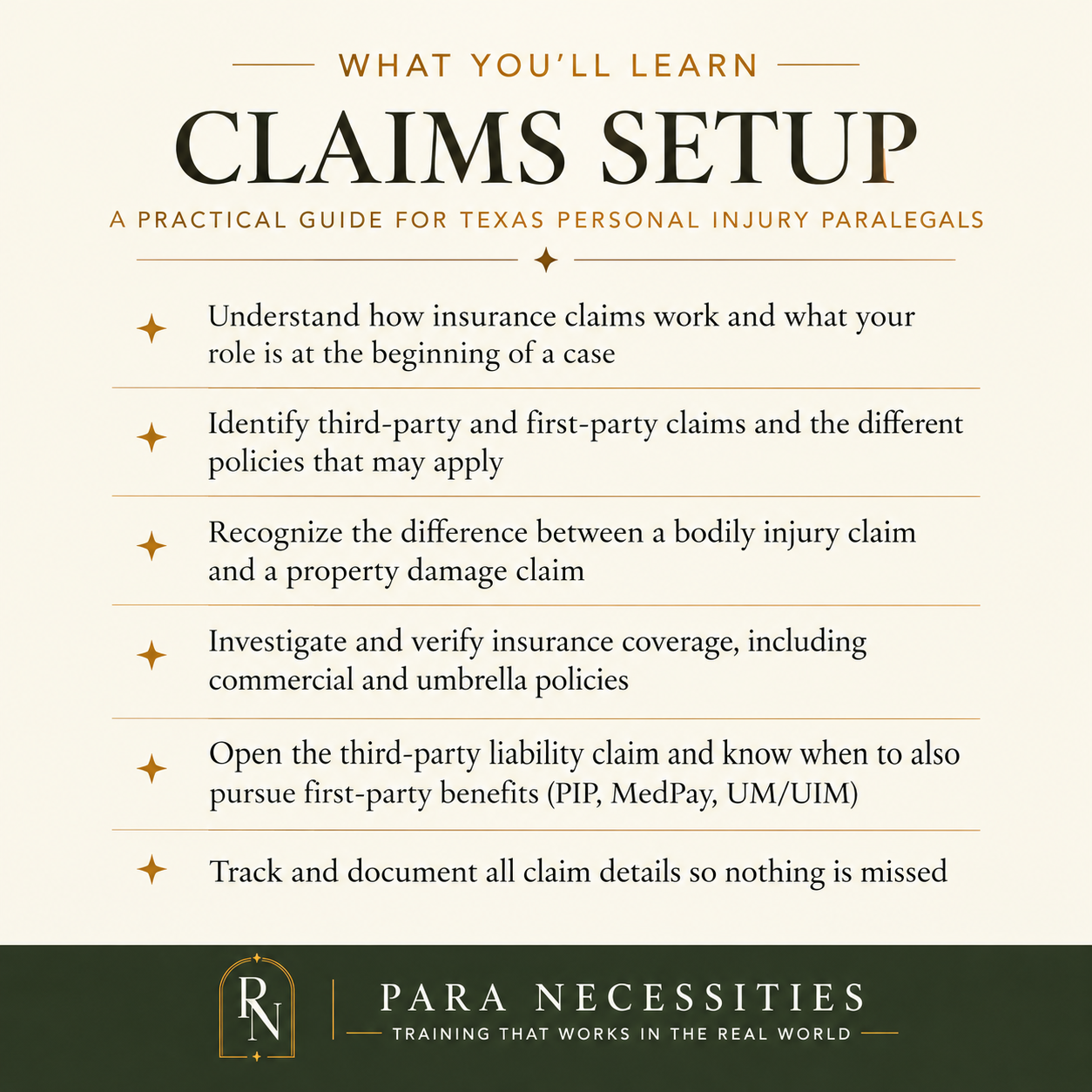
What You'll Learn
This workbook includes practical guidance covering:
Understanding the difference between third-party liability and first-party insurance claims
Identifying potentially available insurance coverage at the beginning of a case
Reviewing insurance cards, declarations pages, crash reports, and other coverage information
Investigating and verifying insurance coverage, including commercial and umbrella policies
Understanding the difference between bodily injury and property damage claims
Opening third-party bodily injury liability claims
Communicating with insurance carriers and obtaining claim numbers and adjuster information
Requesting and documenting coverage information and policy limits
Understanding Personal Injury Protection (PIP) and Medical Payments (MedPay) coverage
Identifying potential Uninsured/Underinsured Motorist (UM/UIM) claims
Understanding how first-party benefits may apply alongside a third-party liability claim
Tracking claim correspondence, coverage questions, and outstanding information
Following up with adjusters and identifying issues that require attorney involvement
Organizing claim information and using practical checklists to ensure setup is complete
Proper Claim Setup Makes Everything That Follows Easier
One of the most common problems in personal injury case management is discovering missing insurance information weeks or months after a case has been opened.
A claim may have been reported, but that doesn't necessarily mean all available coverage has been identified, the correct adjuster has been assigned, or the necessary information has been requested.
This workbook focuses on getting those details organized early, documenting what has been confirmed, and establishing a follow-up process so outstanding coverage questions don't get forgotten.
This Workbook Is for You If...
You're a Texas personal injury paralegal learning how to open and manage insurance claims, you've been responsible for setting up cases but want a better understanding of the different types of coverage, or you want a practical desk reference for identifying insurance, communicating with adjusters, and tracking claims from the beginning.
Digital Download
You will receive an email containing your download immediately after completing your purchase. If you do not receive it, please check your spam or junk folder.
Please Note: Para Necessities materials are provided for educational and training purposes only and are not legal advice. Roberson Legal Consulting, LLC is not a law firm, and the author is not an attorney. Laws, rules, procedures, and court requirements may change and may vary by jurisdiction, court, and case. All information, deadlines, procedures, and citations should be independently verified with the applicable rules, court orders, and supervising attorney before use in any legal matter.
Questions about your purchase? Feel free to contact us at info@robersonlegalconsulting.com.