

Interrogatories
Interrogatories aren't just questions to send to your client and copy into a response.
Interrogatories can require information about everything from your client's background and injuries to prior claims, medical history, damages, witnesses, and the factual basis for allegations in the case. Handling them well means knowing what information you already have, what you need from your client, what requires additional investigation, and what should be flagged for attorney review.
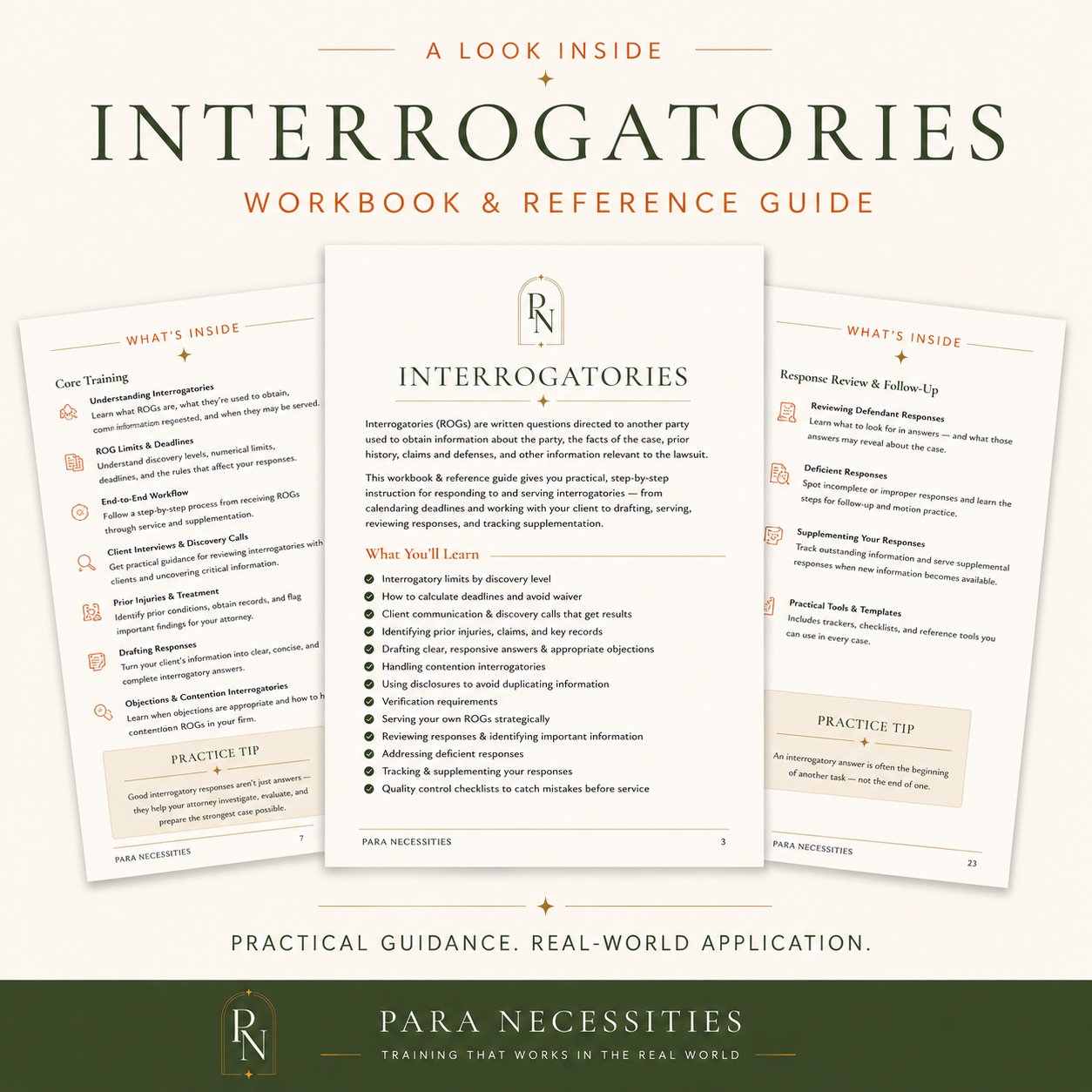
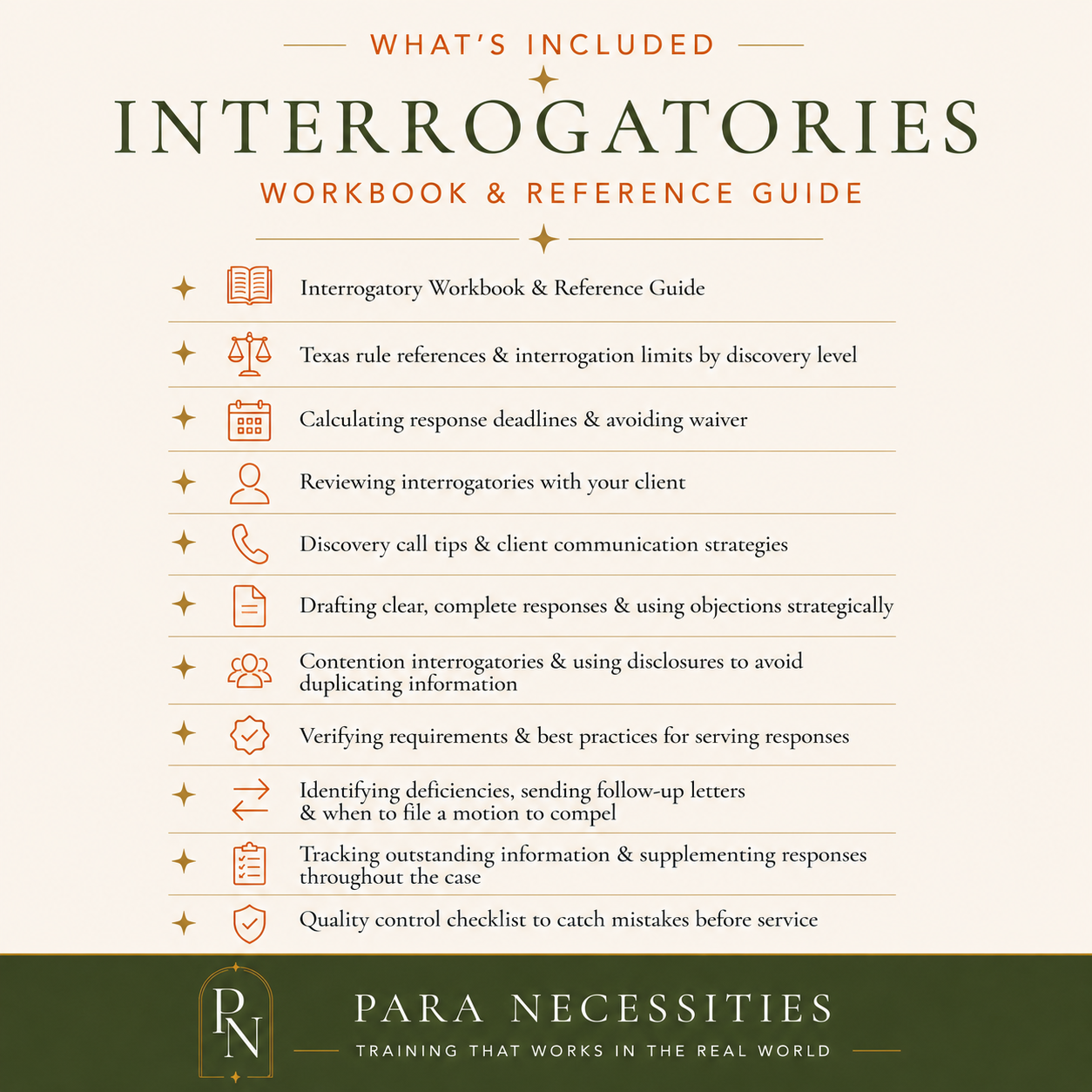
The Para Necessities Interrogatories Workbook walks Texas personal injury paralegals through the practical process of handling interrogatories from the day they're received through client communication, preparation of responses, attorney review, service, and supplementation.
The goal is to help you understand what information you're looking for, why opposing counsel is asking for it, and how to develop complete and consistent responses without waiting until the deadline is around the corner.
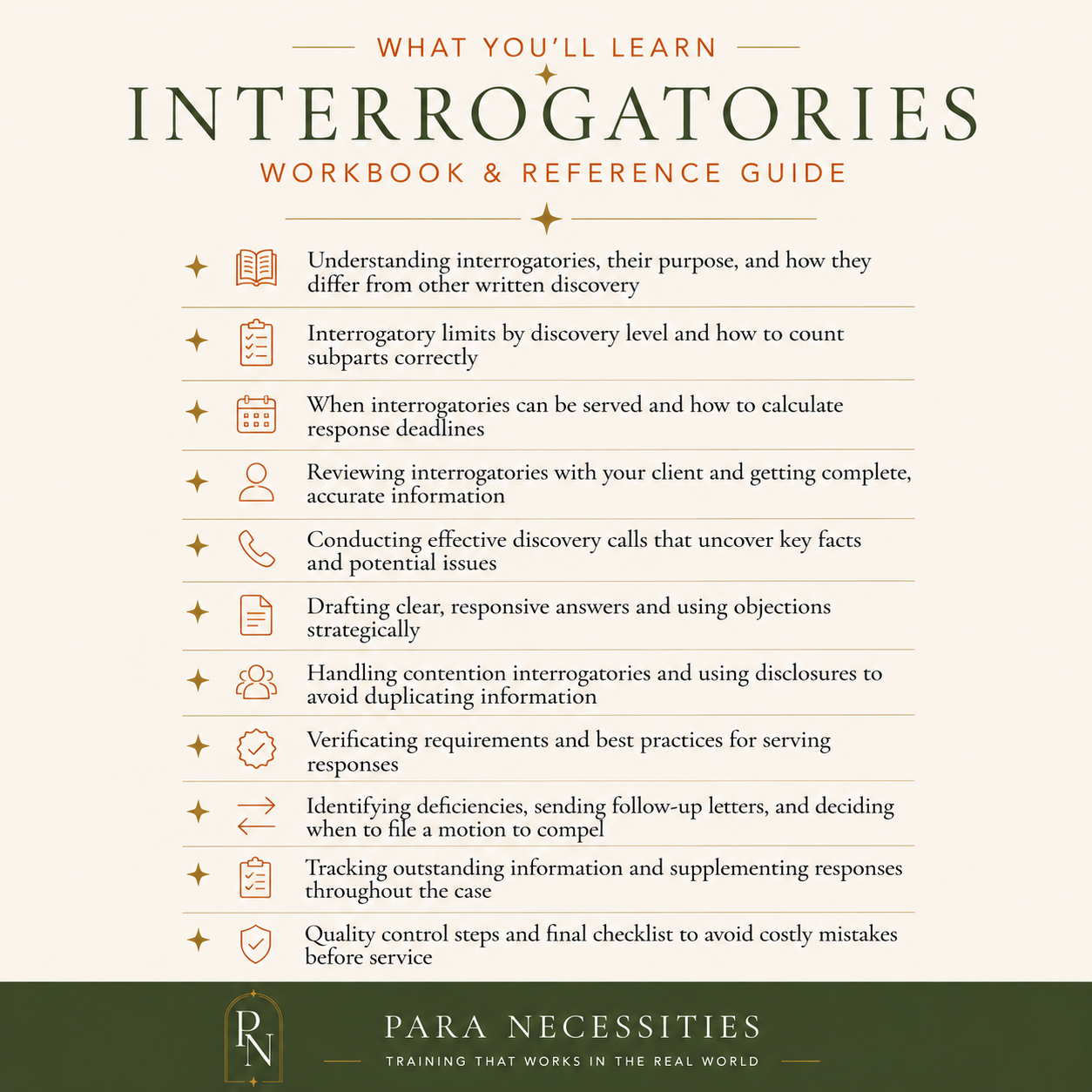
What You'll Learn
This workbook includes practical guidance covering:
Understanding the purpose of interrogatories in personal injury litigation
Reviewing interrogatories when they're received
Identifying and calendaring response deadlines
Understanding Texas discovery levels and applicable interrogatory limits
Determining what information is already available in the file
Identifying what information needs to come directly from the client
Preparing for and conducting a discovery call with your client
Gathering information about prior names, addresses, employment, injuries, medical treatment, claims, and other commonly requested information
Addressing questions involving prior accidents, lawsuits, claims, or criminal history
Reviewing responses for consistency with pleadings, disclosures, medical records, and other discovery
Understanding common discovery objections and recognizing issues that require attorney review
Identifying contention interrogatories and understanding why they may require different treatment
Referencing information contained in disclosures or other discovery when appropriate
Preparing complete responses for attorney review
Serving finalized interrogatory responses
Tracking incomplete or outstanding information
Understanding when responses may need to be supplemented as the case develops
Practical tips for keeping the interrogatory process organized and moving forward
Don't Just Forward Them to the Client
One of the easiest ways for interrogatory responses to become overwhelming is to send the entire document to the client and hope it comes back complete.
A paralegal who understands the discovery process can help identify what information is actually needed, where that information may already exist, what needs to be discussed with the client, and what requires attorney involvement.
This workbook is designed to help you manage that process intentionally so you're not scrambling to fill in missing information right before responses are due.
This Workbook Is for You If...
You're a Texas personal injury paralegal who is new to written discovery, you've been told to “get the interrogatories answered” without being taught how to manage the process, you're transitioning into litigation, or you want a practical system for preparing thorough and organized interrogatory responses.
Digital Download
You will receive an email containing your download immediately after completing your purchase. If you do not receive it, please check your spam or junk folder.
Please Note: Para Necessities materials are provided for educational and training purposes only and are not legal advice. Roberson Legal Consulting, LLC is not a law firm, and the author is not an attorney. Laws, rules, procedures, and court requirements may change and may vary by jurisdiction, court, and case. All information, deadlines, procedures, and citations should be independently verified with the applicable rules, court orders, and supervising attorney before use in any legal matter.
Questions about your purchase? Feel free to contact us at info@robersonlegalconsulting.com