Investigation & Evidence Preservation
Investigation & Evidence Preservation
The investigation doesn't stop with the crash report. In many personal injury cases, some of the most important evidence is never included in the initial report, and waiting too long to look for it can mean losing it altogether.
From surveillance footage and witness statements to commercial vehicle records and electronic evidence, the information gathered early in a case can make a significant difference in establishing liability, identifying additional defendants, and preparing the case for litigation.
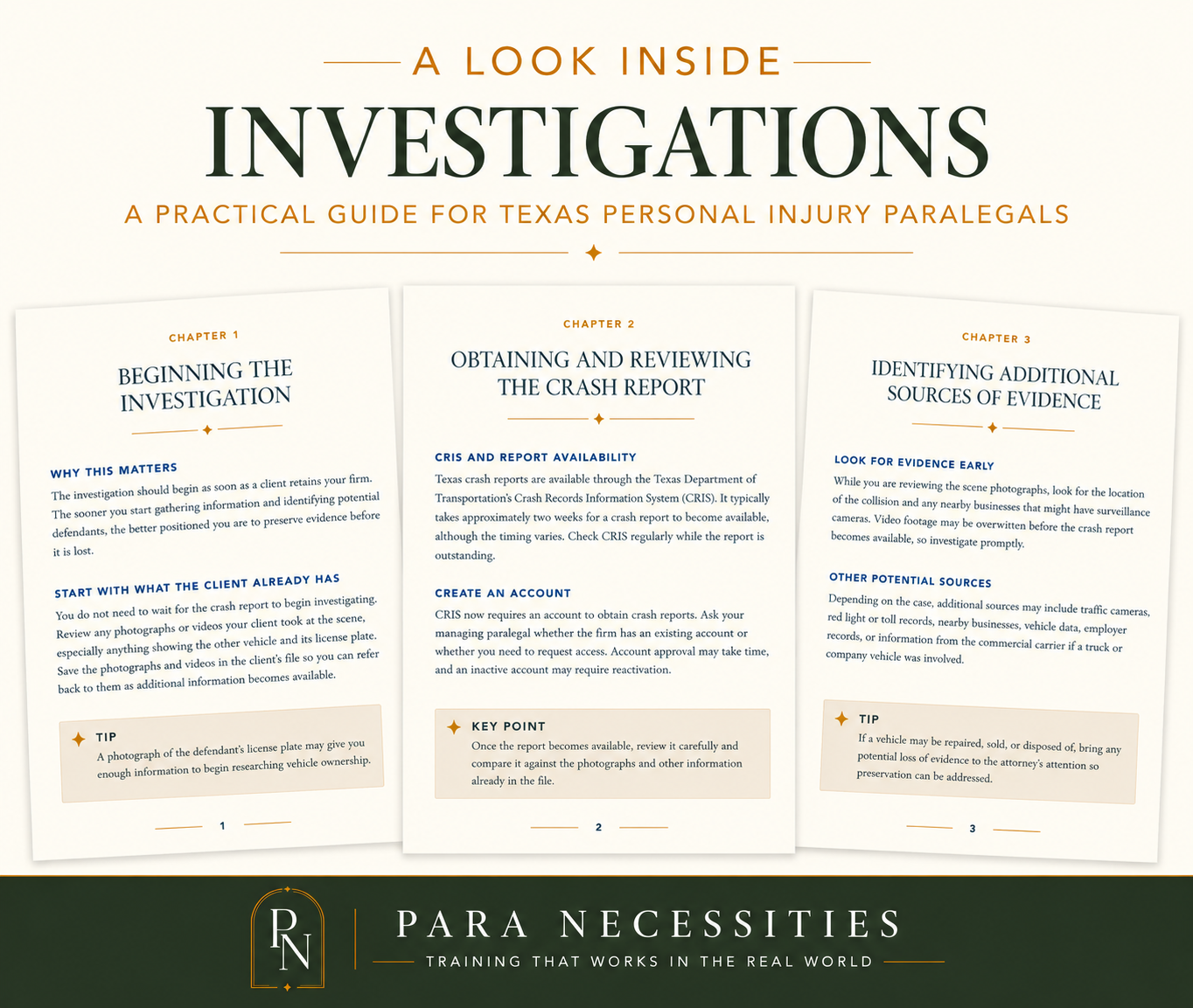
The Para Necessities Investigation & Evidence Preservation Workbook walks Texas personal injury paralegals through the practical process of investigating a claim, identifying potential sources of evidence, requesting and preserving records, and organizing the information for attorney review.
The goal is to help you understand where to look, what to request, how to document your investigation, and when an issue needs to be brought to the attorney's attention.
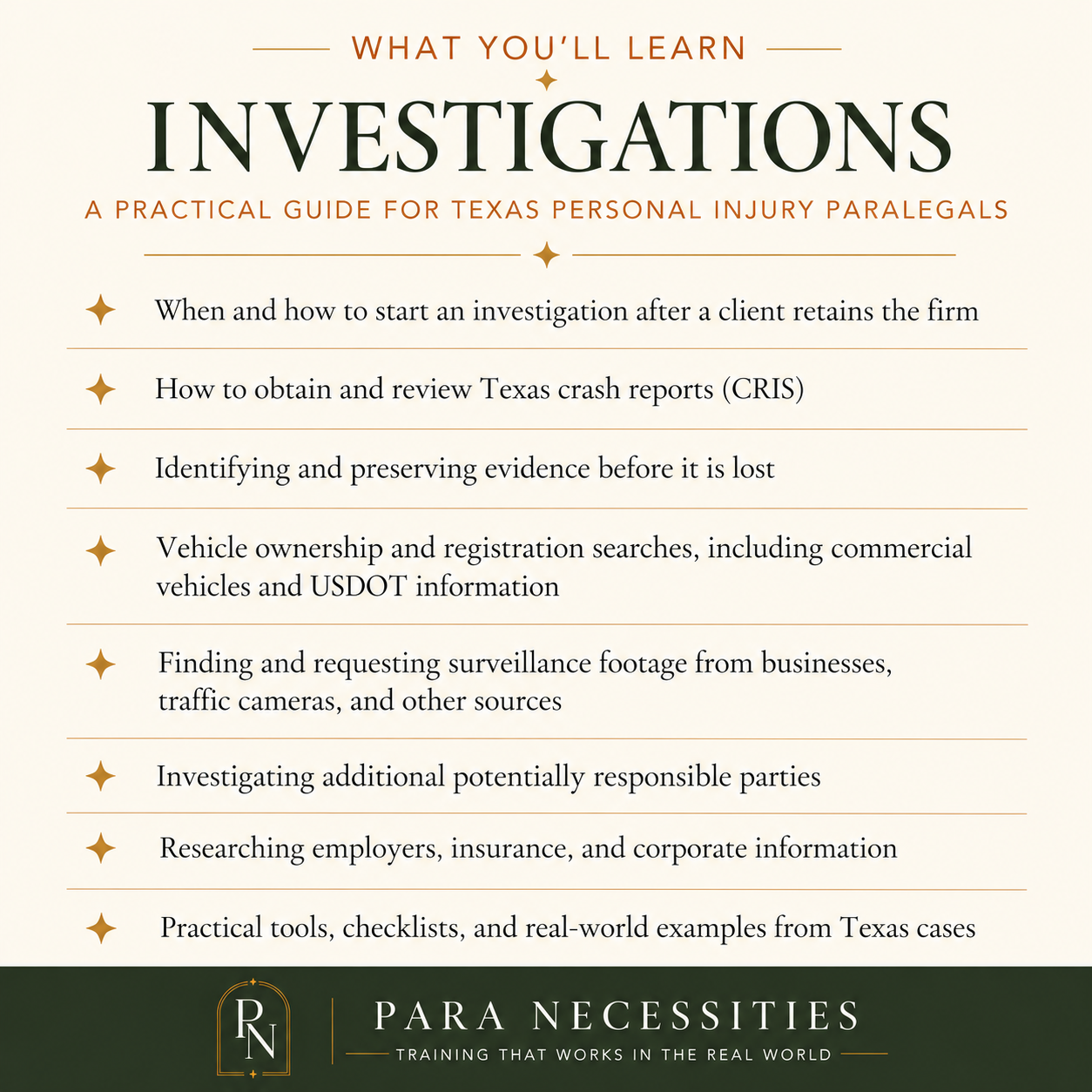
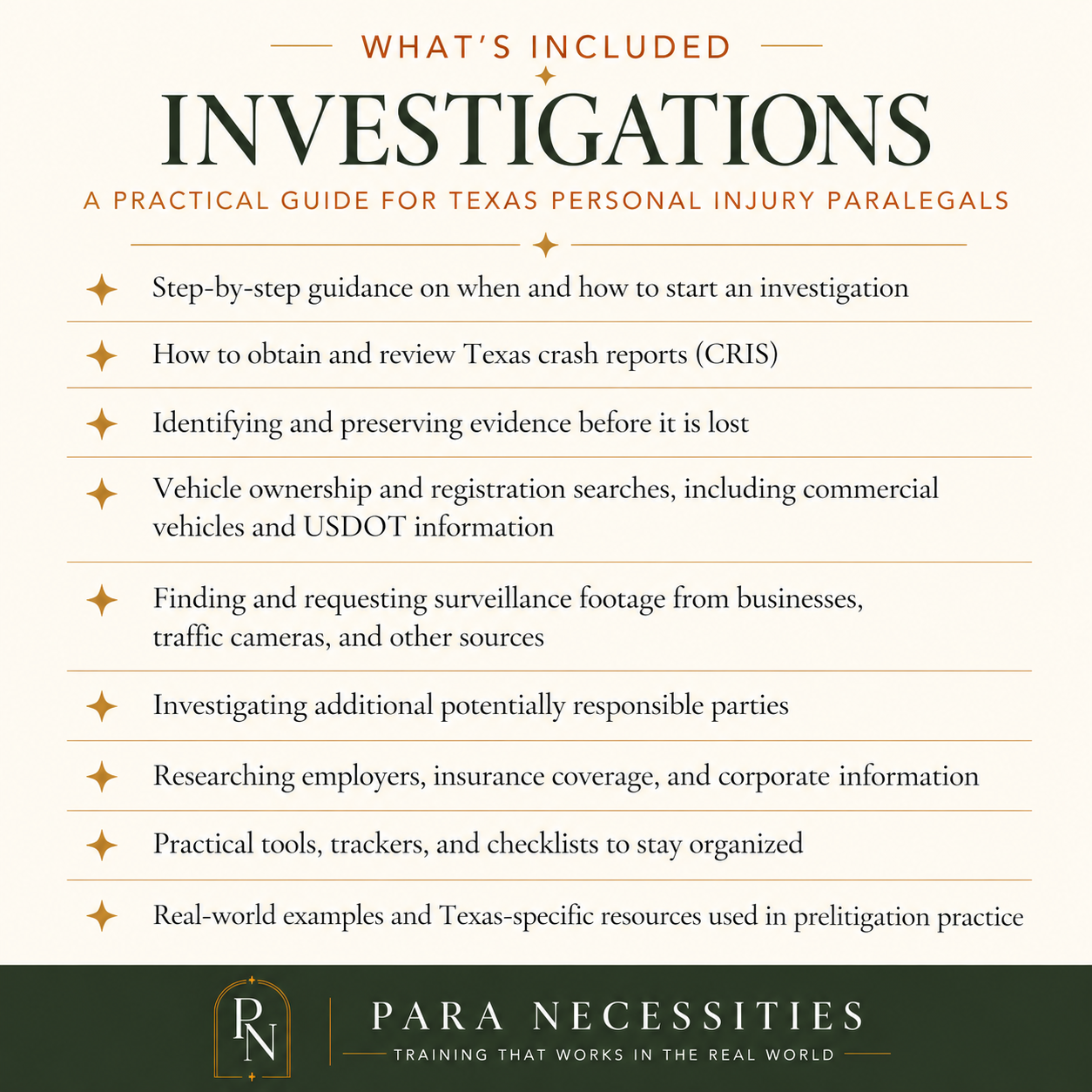
What You'll Learn
This workbook includes practical guidance covering:
Understanding the paralegal's role in investigating a personal injury case
Reviewing crash reports and identifying information that requires additional investigation
Obtaining Texas crash reports and driver records, including CRIS and DPS DR-1 resources
Identifying witnesses and locating potential surveillance footage
Requesting and preserving body-worn camera footage, dashcam recordings, and other video evidence
Identifying potential evidence from businesses, nearby properties, and other third parties
Understanding preservation letters and why timing matters
Investigating commercial vehicle accidents, including FMCSA SAFER and safety records
Researching businesses, potential defendants, and additional sources of liability
Identifying electronic evidence, including event data recorder information
Using public records, online research, and other investigative resources
Documenting requests, tracking responses, and organizing evidence for attorney review
Recognizing when additional investigation or attorney involvement is necessary
Using practical checklists and tracking tools to keep the investigation organized
Evidence Doesn't Always Tell the Whole Story at First
A crash report is a starting point, not necessarily the final word on what happened.
I've worked on cases where additional investigation uncovered information that changed our understanding of liability, including video footage that contradicted the initial account of an accident.
Sometimes the most useful evidence comes from a source you wouldn't have considered without taking the time to investigate further.
This workbook focuses on looking beyond the obvious, recognizing potential sources of evidence, and taking the necessary steps to preserve information before it becomes unavailable.
This Workbook Is for You If...
You're a Texas personal injury paralegal learning how to investigate cases, you've been responsible for requesting crash reports and records but want to understand what else you should be looking for, or you want a practical desk reference for investigating claims, preserving evidence, and preparing a more complete file for litigation.
Digital Download
You will receive an email containing your download immediately after completing your purchase. If you do not receive it, please check your spam or junk folder.
Please Note: Para Necessities materials are provided for educational and training purposes only and are not legal advice. Roberson Legal Consulting, LLC is not a law firm, and the author is not an attorney. Laws, rules, procedures, and court requirements may change and may vary by jurisdiction, court, and case. All information, deadlines, procedures, and citations should be independently verified with the applicable rules, court orders, and supervising attorney before use in any legal matter.
Questions about your purchase? Feel free to contact us at info@robersonlegalconsulting.com.