



Original Petitions & Service
Filing the Original Petition starts the lawsuit—but filing it is only the beginning.
Preparing a personal injury case for litigation requires more than drafting a caption and uploading a petition to the e-filing system. Before suit is filed, the file needs to be reviewed, parties and defendants need to be confirmed, limitations must be considered, filing and service information needs to be accurate, and the paralegal needs a system for tracking what happens after the petition is accepted.
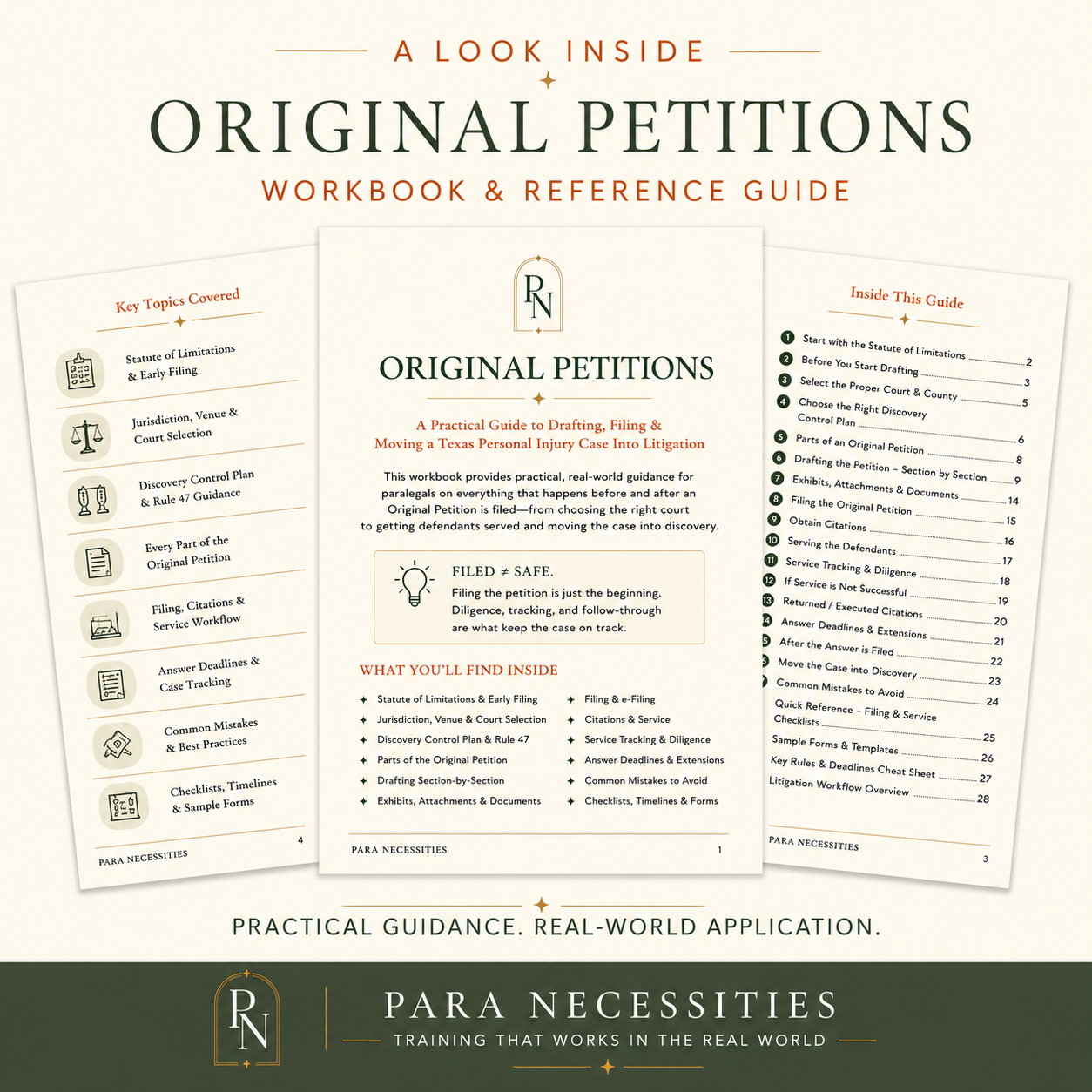
The Para Necessities Original Petitions & Service Workbook walks Texas personal injury paralegals through the practical process of preparing a case for filing, assisting with the Original Petition, e-filing, requesting citation, coordinating service, and tracking the case after suit is filed.
The goal is to help you understand what needs to happen before you click “Submit,” what you're looking for when the filing comes back, and why filing the petition doesn't mean your job is finished.
What You'll Learn
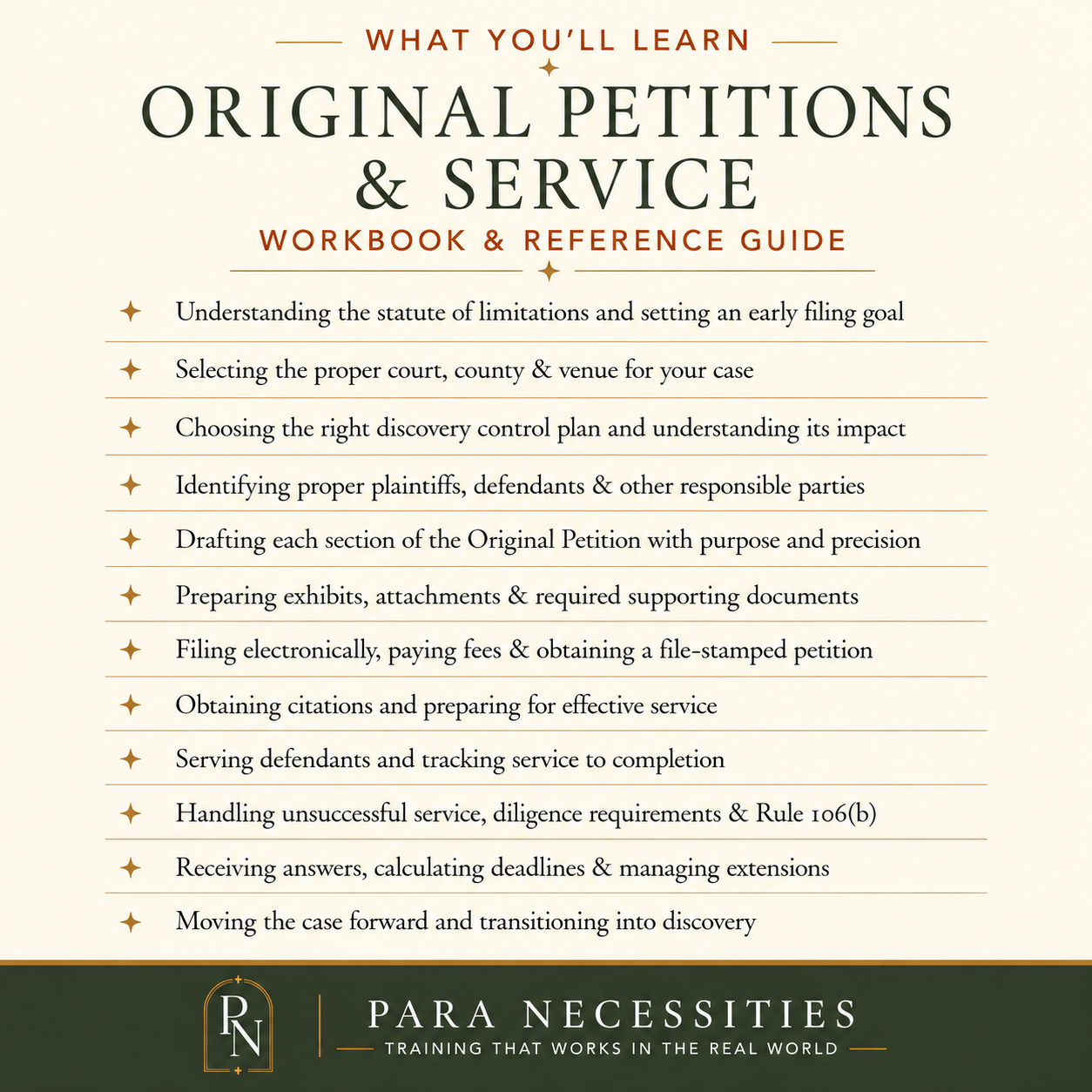
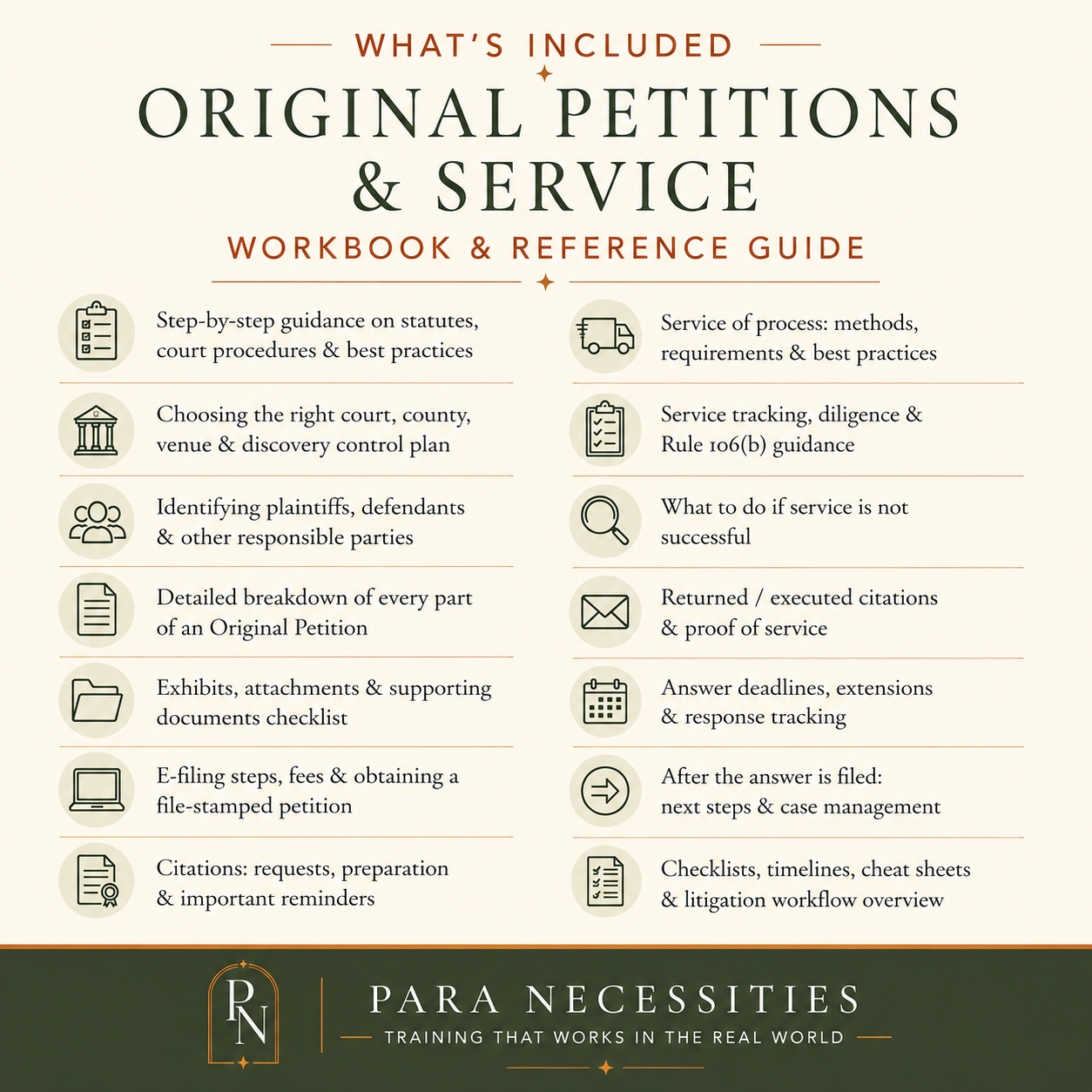
This workbook includes practical guidance covering:
Understanding the paralegal's role in preparing a personal injury case for litigation
Reviewing the file before suit is filed
Identifying and calendaring the statute of limitations
Confirming the correct parties and defendant information
Gathering the information needed to prepare the Original Petition
Understanding the basic components of a Texas Original Petition
Reviewing the petition and supporting information for accuracy and consistency
Recognizing issues that require attorney review before filing
Preparing the petition and related documents for e-filing
Understanding filing codes, fees, and common e-filing considerations
Reviewing the filing confirmation and accepted documents
Requesting and reviewing citation
Understanding the importance of checking citation for accuracy before service
Coordinating service on the defendant
Tracking service attempts and service status
Reviewing and maintaining returns of service
Monitoring the file after service
Tracking the defendant's answer and other post-service activity
Knowing when follow-up may be needed if service is unsuccessful
Keeping filing and service documentation organized in the case file
Practical tips for moving the case from filing into the next stage of litigation
Filing Suit Isn't the Finish Line
One of the easiest mistakes to make is treating “Petition filed” as a completed task.
After filing, you still need to know whether the filing was accepted, whether citation was issued correctly, whether the defendant was actually served, whether the return of service was filed, and what happens next.
This workbook is designed to help you see filing and service as a process, not two isolated tasks, so the case doesn't sit simply because everyone assumed someone else was watching it.
This Workbook Is for You If...
You're a Texas personal injury paralegal preparing to file your first lawsuit, you're transitioning from pre-litigation into litigation, you've been told to “file the petition and get them served” without much explanation of what happens next, or you want a practical desk reference for managing the filing and service process more confidently.
Digital Download
You will receive an email containing your download immediately after completing your purchase. If you do not receive it, please check your spam or junk folder.
Please Note: Para Necessities materials are provided for educational and training purposes only and are not legal advice. Roberson Legal Consulting, LLC is not a law firm, and the author is not an attorney. Laws, rules, procedures, and court requirements may change and may vary by jurisdiction, court, and case. All information, deadlines, procedures, and citations should be independently verified with the applicable rules, court orders, and supervising attorney before use in any legal matter.
Questions about your purchase? Feel free to contact us at info@robersonlegalconsulting.com