

Common Pleadings & Motions
You don't need to be the attorney arguing the motion to understand what's happening, what comes next, and what your role is.
Litigation brings a steady stream of pleadings, motions, hearings, deadlines, and court orders—and when you're new to litigation, the names alone can be intimidating. Motion to Compel. Motion to Quash. Motion for Continuance. Motion to Reinstate. Summary Judgment. What is it? Why are we filing it? What does the paralegal need to do before and after it's filed?
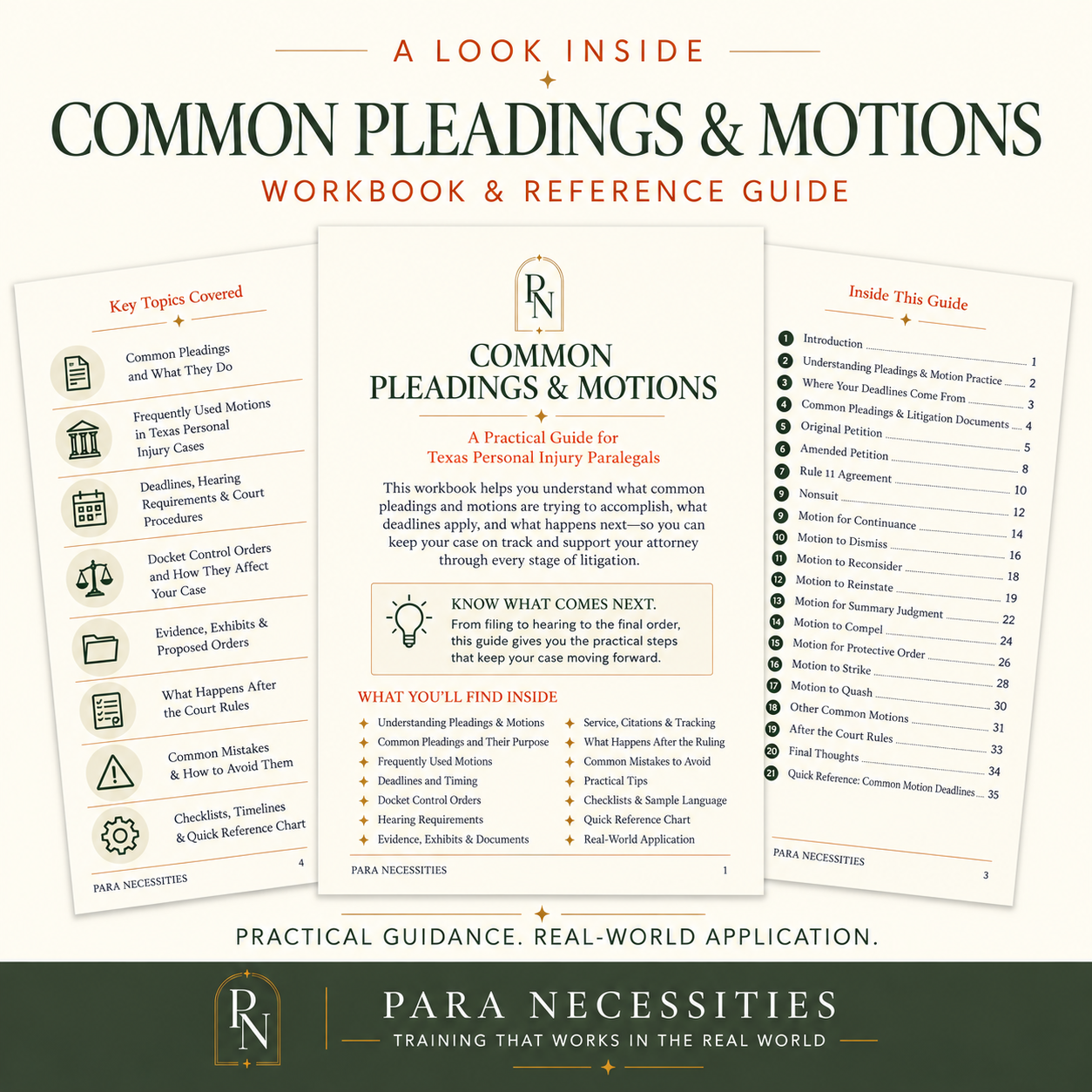
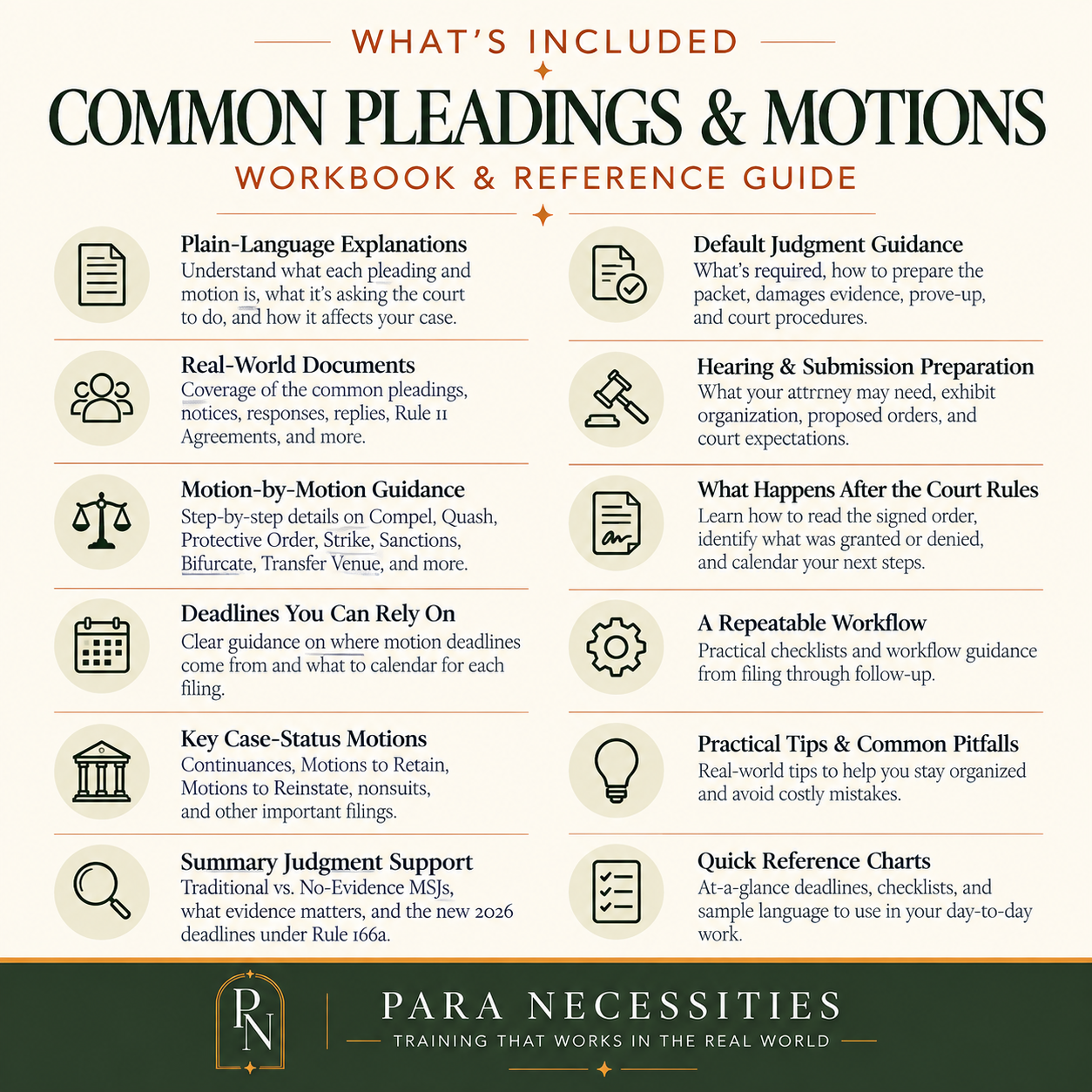
The Para Necessities Common Pleadings & Motions Workbook gives Texas personal injury paralegals a practical reference for many of the pleadings and motions they're likely to encounter during civil litigation.
Rather than teaching you how to practice law, this workbook is designed to help you understand what these documents are, why they may appear in your case, what procedural steps surround them, and how the paralegal helps keep the process moving.
What's Inside
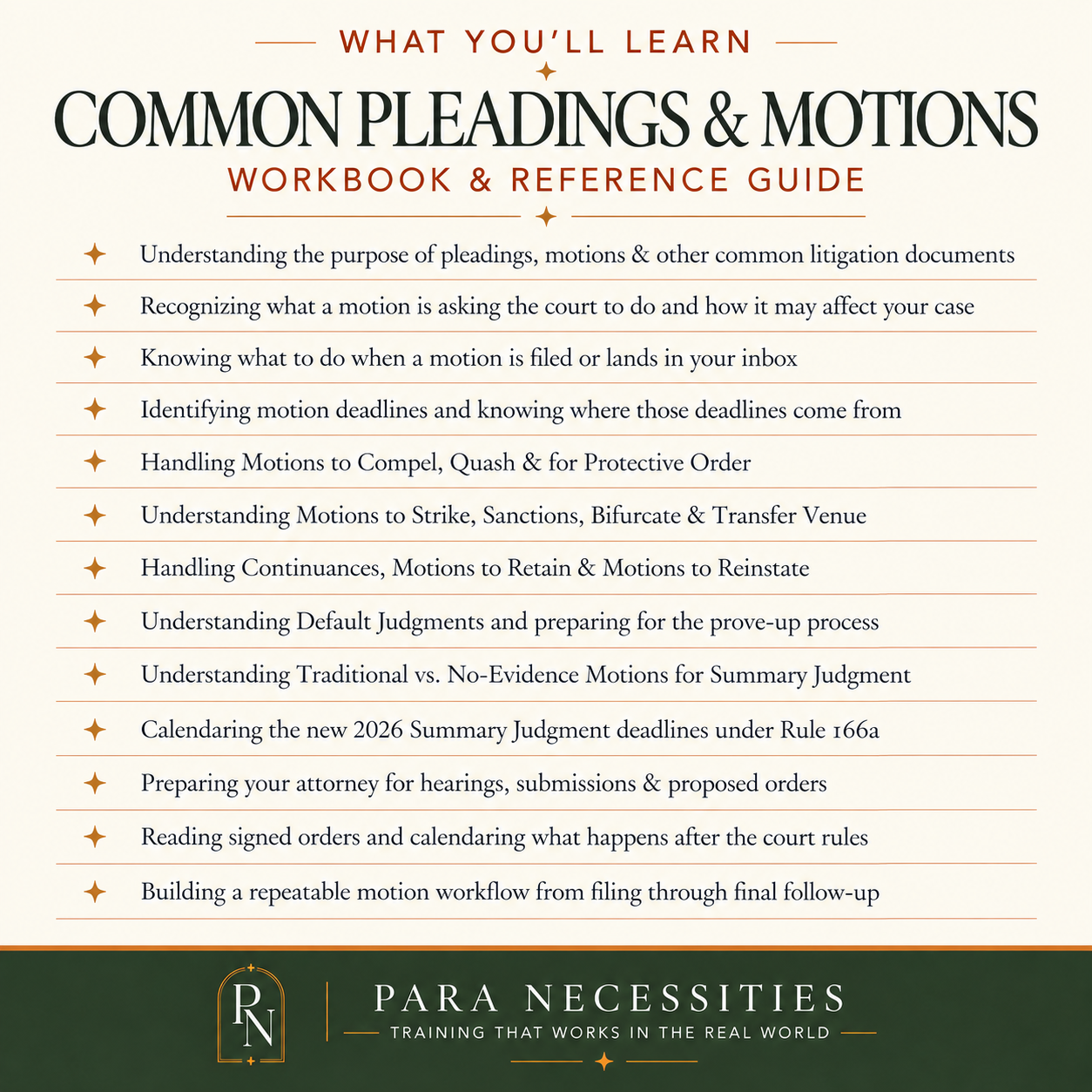
This workbook includes practical guidance on common Texas pleadings and motions, including:
Motions for Continuance — Understanding why a continuance may be requested and the procedural steps surrounding the request
Motions to Retain — Recognizing when a case is at risk of dismissal and what happens when the firm seeks to keep it on the court's docket
Motions to Reinstate — Understanding the process when a case has been dismissed and reinstatement is sought
Motions to Compel — Understanding how discovery disputes can progress from outstanding discovery to conferences, motions, hearings, and court orders
Motions to Quash Oral Depositions — Understanding deposition notices, timing issues, and the procedural effect a motion to quash may have
Motions to Quash or Object to Depositions on Written Questions — Recognizing DWQ issues, tracking objection deadlines, and assisting with the procedural process
Motions for Protective Order — Understanding when protection from certain discovery may be requested
Motions for Sanctions — Understanding the circumstances that can lead to a request for sanctions and the importance of documenting the underlying issue
Motions to Bifurcate — Understanding what it means when a party asks the court to separate issues for trial
Motions for Default Judgment — Understanding the procedural steps and documentation involved when a defendant fails to answer
Motions to Transfer Venue — Understanding challenges to where a lawsuit has been filed
Motions for Summary Judgment — Understanding traditional and no-evidence summary judgment practice and the importance of tracking related deadlines
Hearing Preparation — Practical guidance for organizing the motion, response, exhibits, proposed orders, hearing information, and other materials the attorney may need
Understand the Process Around the Pleading
Knowing the name of a motion isn't enough.
As the paralegal, you may be responsible for filing and serving documents, calendaring response or hearing deadlines, obtaining a hearing date, preparing exhibits, organizing hearing materials, coordinating with the court, tracking signed orders, and making sure the file moves forward afterward.
This workbook helps connect the document itself to the workflow surrounding it, so when your attorney says, “We need to file a Motion to Compel,” you have a better understanding of what that means for the file and what may need to happen next.
This Workbook Is for You If...
You're a Texas personal injury paralegal who is new to litigation, you recognize the names of common motions but aren't always sure what they mean or what happens next, you've been asked to prepare or file pleadings without much explanation of the surrounding process, or you want a practical desk reference for the pleadings and motions you encounter throughout litigation.
Digital Download
You will receive an email containing your download immediately after completing your purchase. If you do not receive it, please check your spam or junk folder.
Please Note: Para Necessities materials are provided for educational and training purposes only and are not legal advice. Roberson Legal Consulting, LLC is not a law firm, and the author is not an attorney. Laws, rules, procedures, and court requirements may change and may vary by jurisdiction, court, and case. All information, deadlines, procedures, and citations should be independently verified with the applicable rules, court orders, and supervising attorney before use in any legal matter.
Questions about your purchase? Feel free to contact us at info@robersonlegalconsulting.com