

Requests for Admission
Requests for Admission may look simple, but the consequences of getting them wrong can be anything but.
Unlike other written discovery, Requests for Admission ask a party to admit or deny specific facts, statements, or issues in the case. That means every response needs to be reviewed carefully, discussed with the client when necessary, and completed on time.
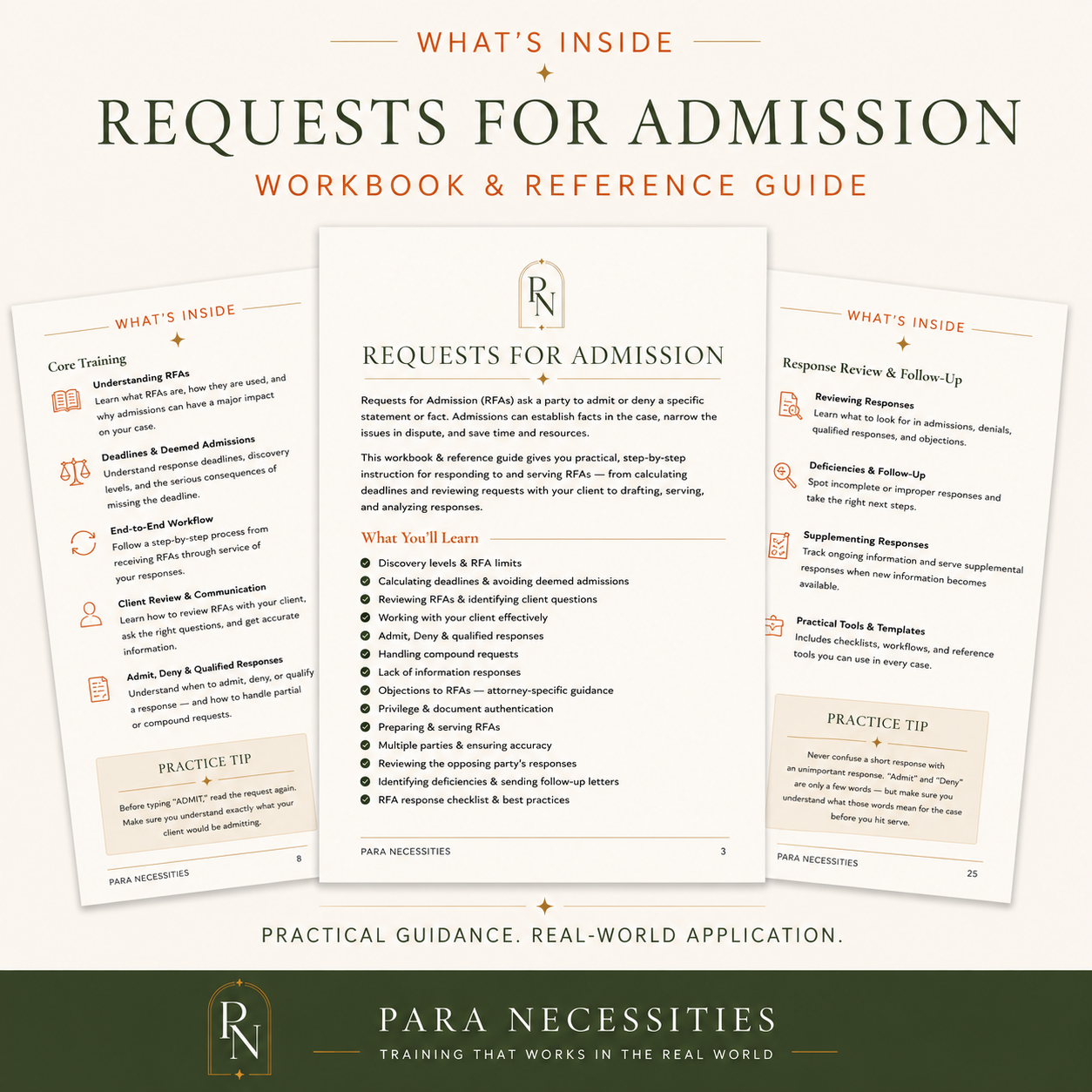
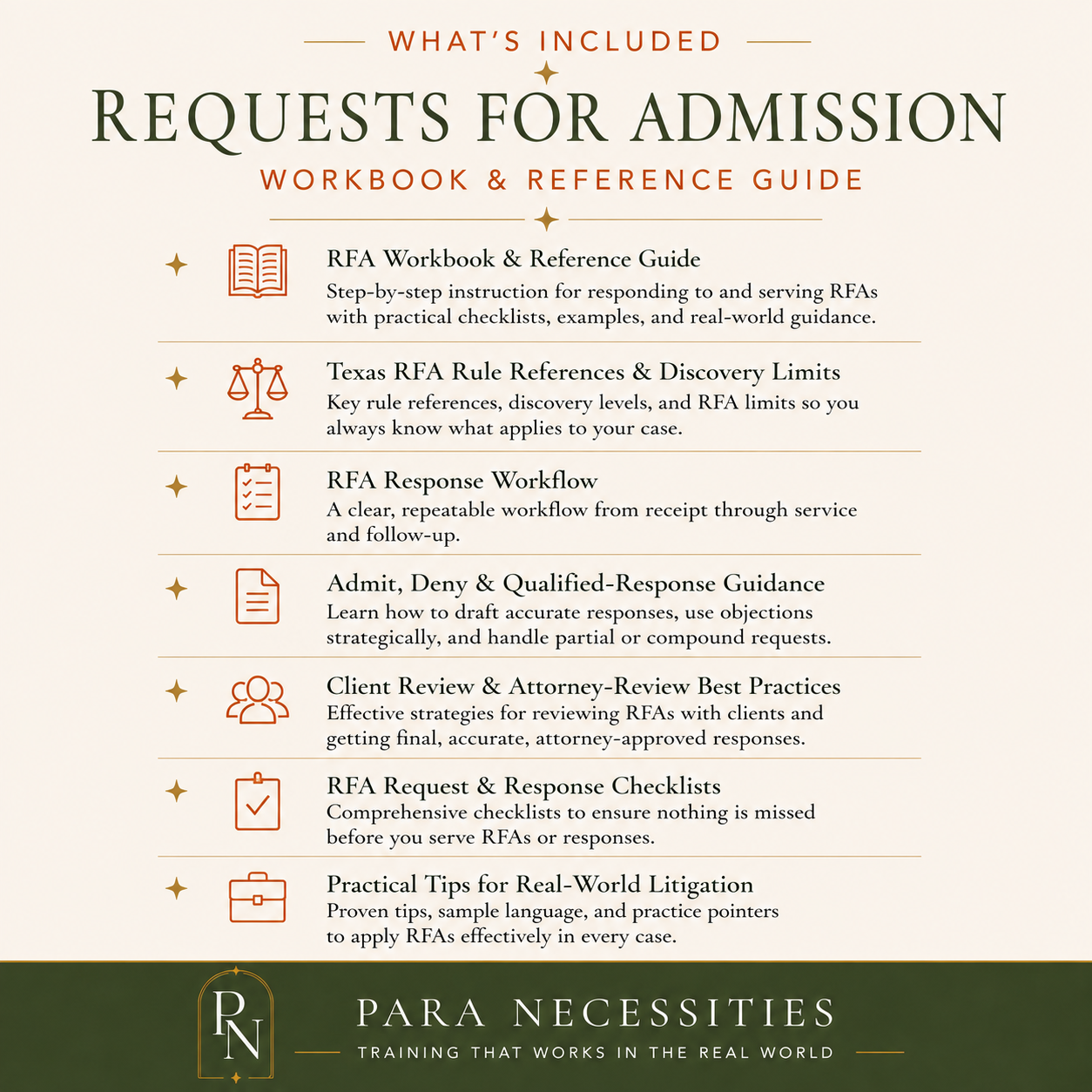
The Para Necessities Requests for Admission Workbook walks Texas personal injury paralegals through the practical process of handling RFAs from the day they're received through client review, attorney review, service, and supplementation.
The goal is to help you understand what you're responding to, why the response matters, and when something needs to be brought to your attorney's attention instead of simply working your way down the page answering “Admit” or “Deny.”
What You'll Learn
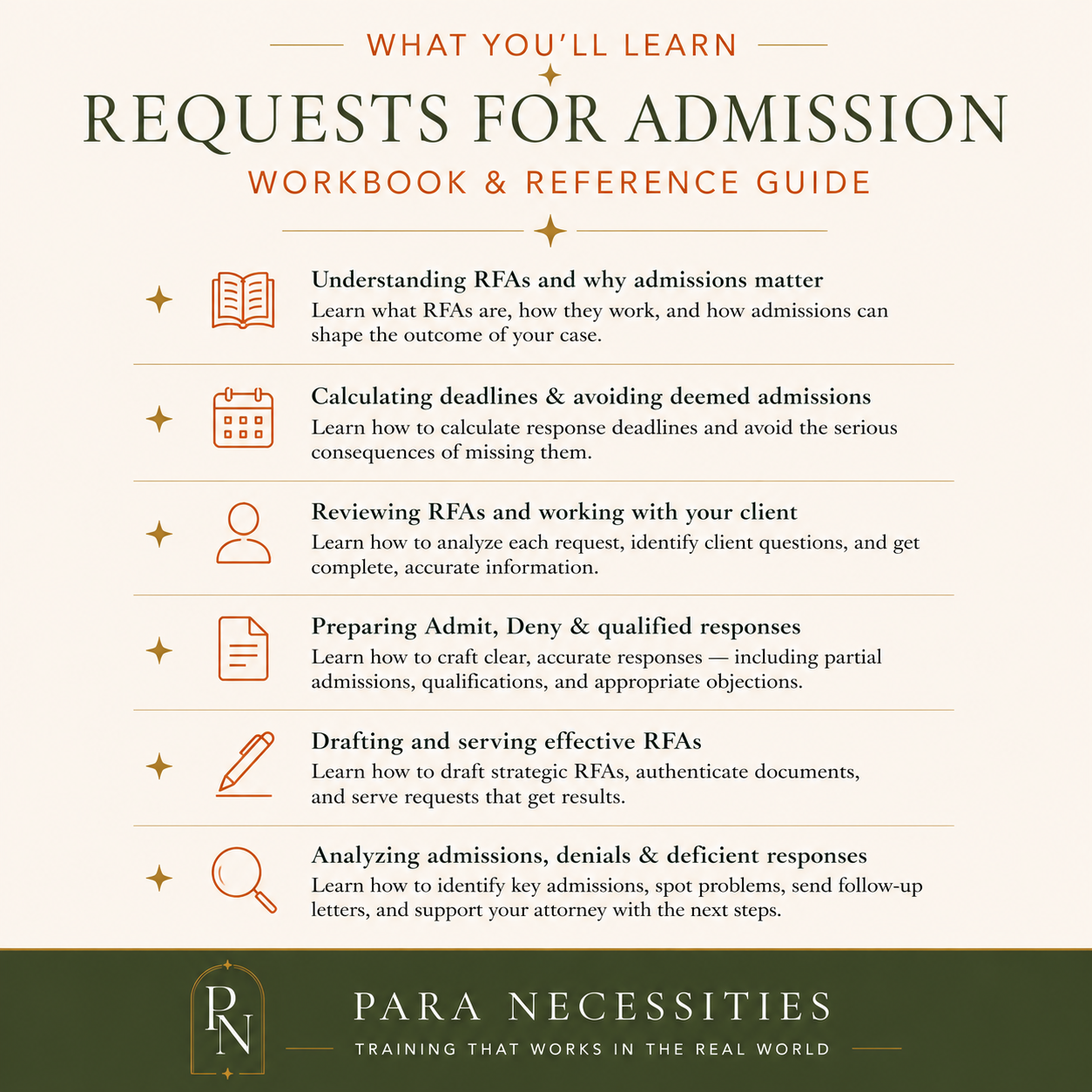
This workbook includes practical guidance covering:
Understanding the purpose of Requests for Admission
Reviewing RFAs when they're received
Identifying and calendaring response deadlines
Recognizing the importance of timely responses
Reviewing each request carefully before preparing a response
Determining what information needs to be confirmed with the client
Working with your client to obtain accurate information
Understanding the difference between admitting and denying a request
Recognizing when a response requires additional explanation or qualification
Identifying requests that may require an objection or attorney review
Keeping objections focused rather than objecting unnecessarily
Comparing proposed responses against information already contained in the file
Preparing responses for attorney review
Serving completed responses
Tracking information that may require supplementation
Practical tips for managing RFAs efficiently and accurately
They're Not Just Yes-or-No Questions
Requests for Admission can appear straightforward because many of the responses are simply admissions or denials. But each answer can affect how an issue is treated later in the case.
That makes careful review important. The paralegal needs to know what the client is being asked to admit, whether the proposed response is consistent with the file, and when an issue needs attorney attention before the response is finalized.
This workbook helps you approach RFAs thoughtfully instead of treating them as the easiest set of discovery on your desk.
This Workbook Is for You If...
You're a Texas personal injury paralegal who is new to written discovery, you've been asked to prepare responses to Requests for Admission without much explanation, you're transitioning into litigation, or you want a practical desk reference for handling RFAs more confidently and consistently.
Digital Download
You will receive an email containing your download immediately after completing your purchase. If you do not receive it, please check your spam or junk folder.
Please Note: Para Necessities materials are provided for educational and training purposes only and are not legal advice. Roberson Legal Consulting, LLC is not a law firm, and the author is not an attorney. Laws, rules, procedures, and court requirements may change and may vary by jurisdiction, court, and case. All information, deadlines, procedures, and citations should be independently verified with the applicable rules, court orders, and supervising attorney before use in any legal matter.
Questions about your purchase? Feel free to contact us at info@robersonlegalconsulting.com