

Request for Production
Responding to Requests for Production is more than gathering documents and sending them to opposing counsel.
Requests for Production require you to understand what is actually being requested, determine what responsive documents may exist, work with your client to collect them, identify issues that need attorney review, organize the production, and make sure the response matches what you're actually producing.
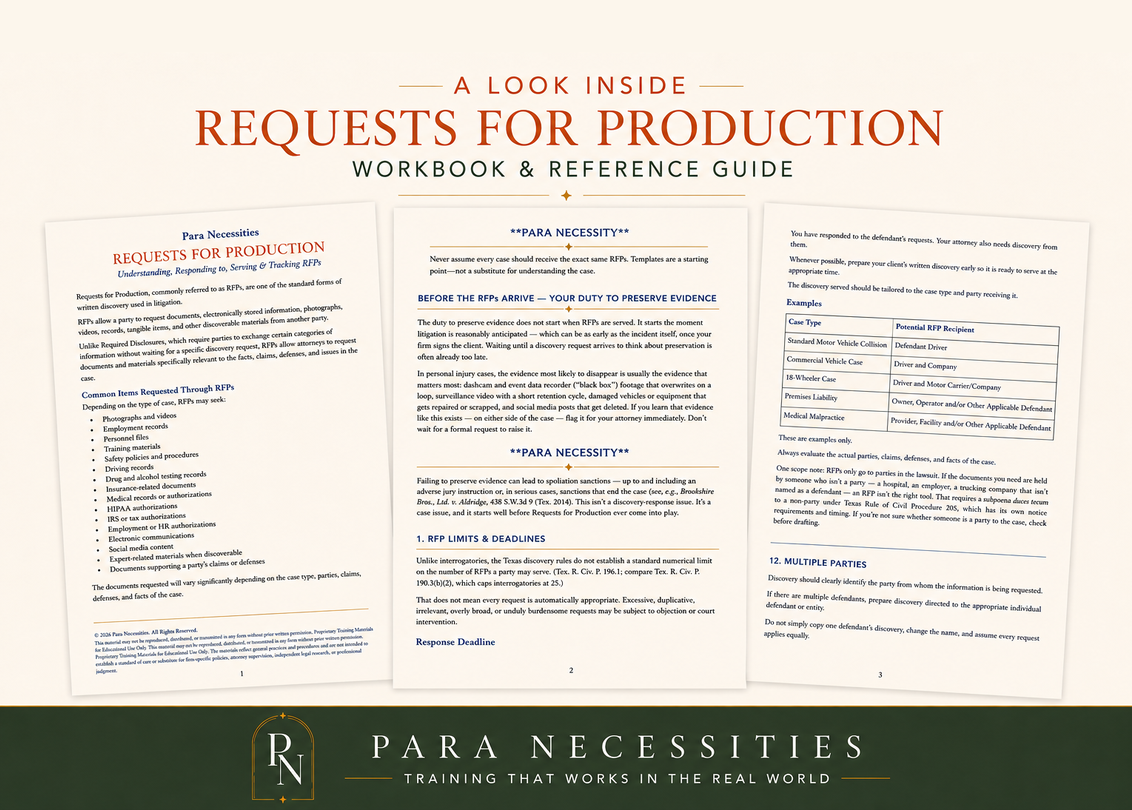
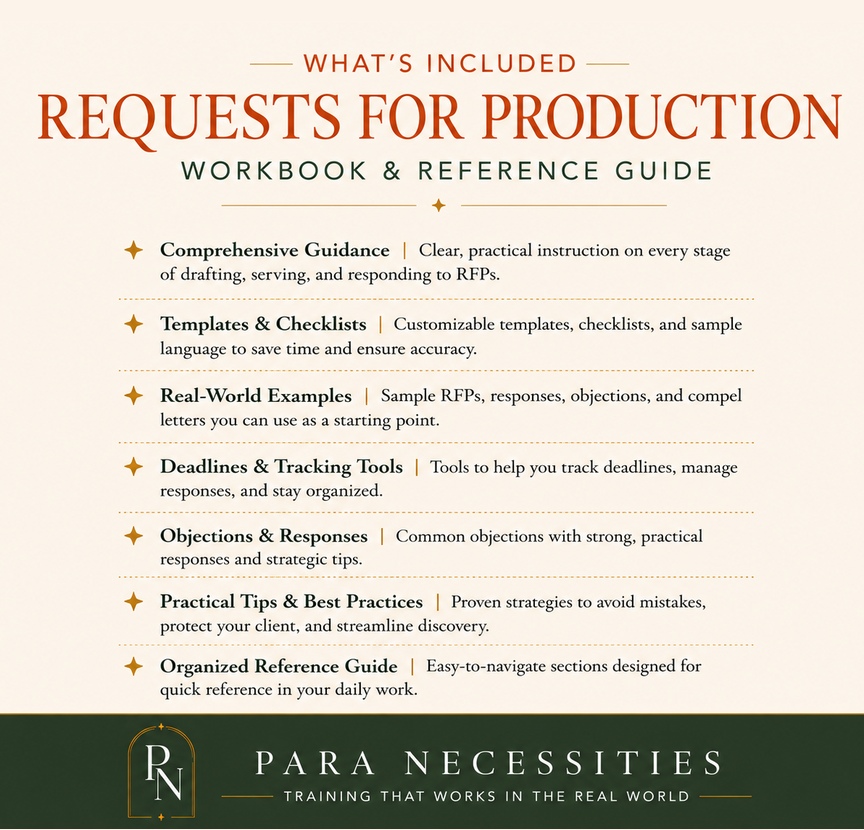
The Para Necessities Requests for Production Workbook walks Texas personal injury paralegals through the practical process of handling RFPs from the day they're received through service, production, and supplementation.
Instead of simply giving you a list of steps, this workbook helps you understand what you're looking for, why it matters, and how to keep the discovery process organized from beginning to end.
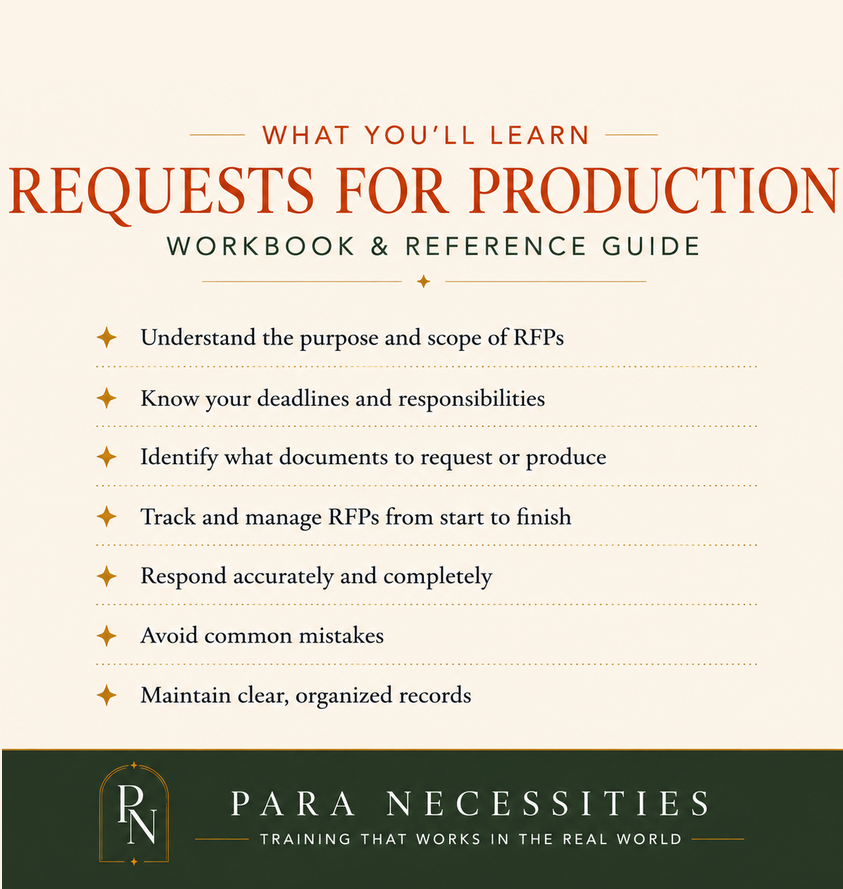
What You'll Learn
This workbook includes practical guidance covering:
Reviewing Requests for Production when they're received
Identifying and calendaring response deadlines
Breaking down requests to determine what information and documents are actually being requested
Identifying documents that need to be obtained from the client
Working with your client to collect responsive documents
Reviewing the file for documents already in your firm's possession
Handling requests for authorizations, including medical, employment, tax, and other authorizations
Understanding common issues involving overly broad, vague, irrelevant, or otherwise objectionable requests
Recognizing when a request should be flagged for attorney review
Organizing responsive documents for production
Comparing the written response to the documents being produced
Preparing responses and production for attorney review
Requesting editable versions of discovery when appropriate
Serving discovery responses and produced documents
Tracking documents or information that are still outstanding
Supplementing responses when additional responsive documents become available
Practical tips for keeping written discovery organized throughout the life of the case
It's Not Just “Send the Documents”
A good RFP response requires more than attaching whatever happens to be in the file.
The paralegal needs to understand what was requested, what exists, what has been produced, what is still outstanding, and what may require an objection or attorney review. Developing that process helps prevent incomplete productions, inconsistent responses, and last-minute scrambling before the deadline.
This workbook is designed to help you approach Requests for Production as part of managing the case—not simply another discovery task to check off your list.
This Workbook Is for You If...
You're a Texas personal injury paralegal who is new to written discovery, you've been told to “respond to the RFPs” without much explanation of what that actually involves, you're transitioning into litigation, or you want a practical system for handling document production more confidently and consistently.
Digital Download
You will receive an email containing your download immediately after completing your purchase. If you do not receive it, please check your spam or junk folder.
Please Note: Para Necessities materials are provided for educational and training purposes only and are not legal advice. Roberson Legal Consulting, LLC is not a law firm, and the author is not an attorney. Laws, rules, procedures, and court requirements may change and may vary by jurisdiction, court, and case. All information, deadlines, procedures, and citations should be independently verified with the applicable rules, court orders, and supervising attorney before use in any legal matter.
Questions about your purchase? Feel free to contact us at info@robersonlegalconsulting.com